The Myth of the Overfilled Spice Cupboard (And Why More Spices Don’t Mean Better Cooking)!
January has a way of making us look at our spaces differently.
We clear out drawers, reorganise cupboards, and let go of what feels heavy, unused, or no longer fits.
The kitchen often comes first, and tucked inside it is one space many of us avoid opening properly - the spice cupboard. And I admit, I’ve been there before many times too!
We prolong this area - not only because it’s messy - but because it quietly holds good intentions, half‑used jars, and the feeling that we should be doing more with it.
If the new year has you craving a fresher, lighter way of cooking, this is for you.
Open your spice cupboard for a moment - not the quick glance you do mid‑week while dinner’s already late - but take a proper look.
Jars stacked two rows deep, labels perhaps you vaguely recognise, and spices you know you bought for something… once!
And somehow, despite all of that, you still find yourself thinking: “I don’t really know how to use spices.”
I see this all the time.
At markets and in my workshops I have had many conversations that start with: “I love spices, I just don’t know what to do with them!”
This is the myth of the overfilled spice cupboard - this idea that having more spices automatically makes you a better cook.
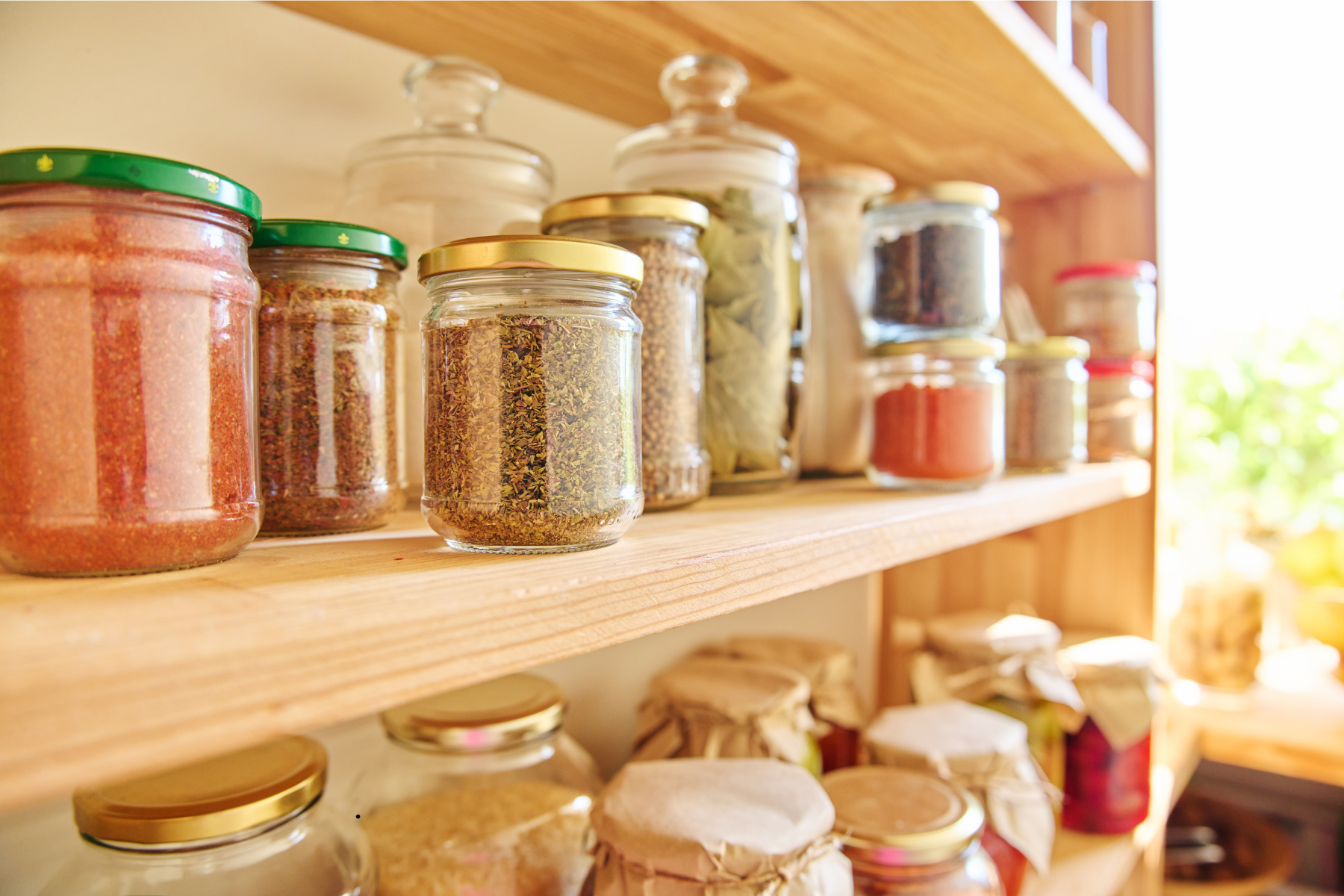
An overfilled spice pantry
How the Overfilled Spice Cupboard Became Normal
Modern cooking culture quietly taught us that abundance equals ability.
More ingredients meant better cooking, more spices meant more flavour, and a fuller cupboard meant you were doing it right. So we accumulated.
One spice jar for that one recipe we bookmarked, a blend we didn’t want to miss out on, or a gift we felt too guilty to pass on.
None of it would have felt excessive in the moment, but over time, the spice cupboard filled up, and confidence slipped away. We slowly learnt that owning spices isn’t the same as knowing how to use spices.
Why an Overfilled Spice Cupboard Makes Cooking Harder
An overfilled spice cupboard looks abundant, and even beautiful to look at - but in practice, it often creates overwhelm.
Too many choices, too many half‑used jars, too many spices you don’t quite trust yourself with, and instead of inspiration, there’s hesitation; and instead of intuitive cooking, there’s second‑guessing!
Spices - ingredients that should bring flavour, warmth, and cultural depth, become clutter, and clutter rarely leads to confident cooking.
What Actually Builds Flavour and Cooking Confidence
Great flavour doesn’t come from variety, it comes from familiarity.
From using the same everyday spices again and again and recognising how cumin smells when it hits a hot pan, or understanding when cinnamon adds warmth rather than sweetness. It’s from learning how spices behave, and not just following recipes.
For most of history, cooks worked with a small, reliable set of spices.
They didn’t rotate endlessly, they built relationships with what they had - and that relationship is what creates confidence.
From Collecting Spices to Actually Cooking With Them
This is where a small mindset shift changes everything.
Instead of asking:
What spices should I buy next?
Try asking:
Which spices do I already use, and how can I use them more often?
When you focus on a core set of everyday spices, cooking becomes simpler.
You stop overthinking, you rely less on recipes, and you start trusting your palate.
This is exactly why I created the ‘Everyday Spice Collection Box’ - not as a collection, but as a practical foundation of essential spices you can use across everyday meals.
Fewer jars, more purpose.
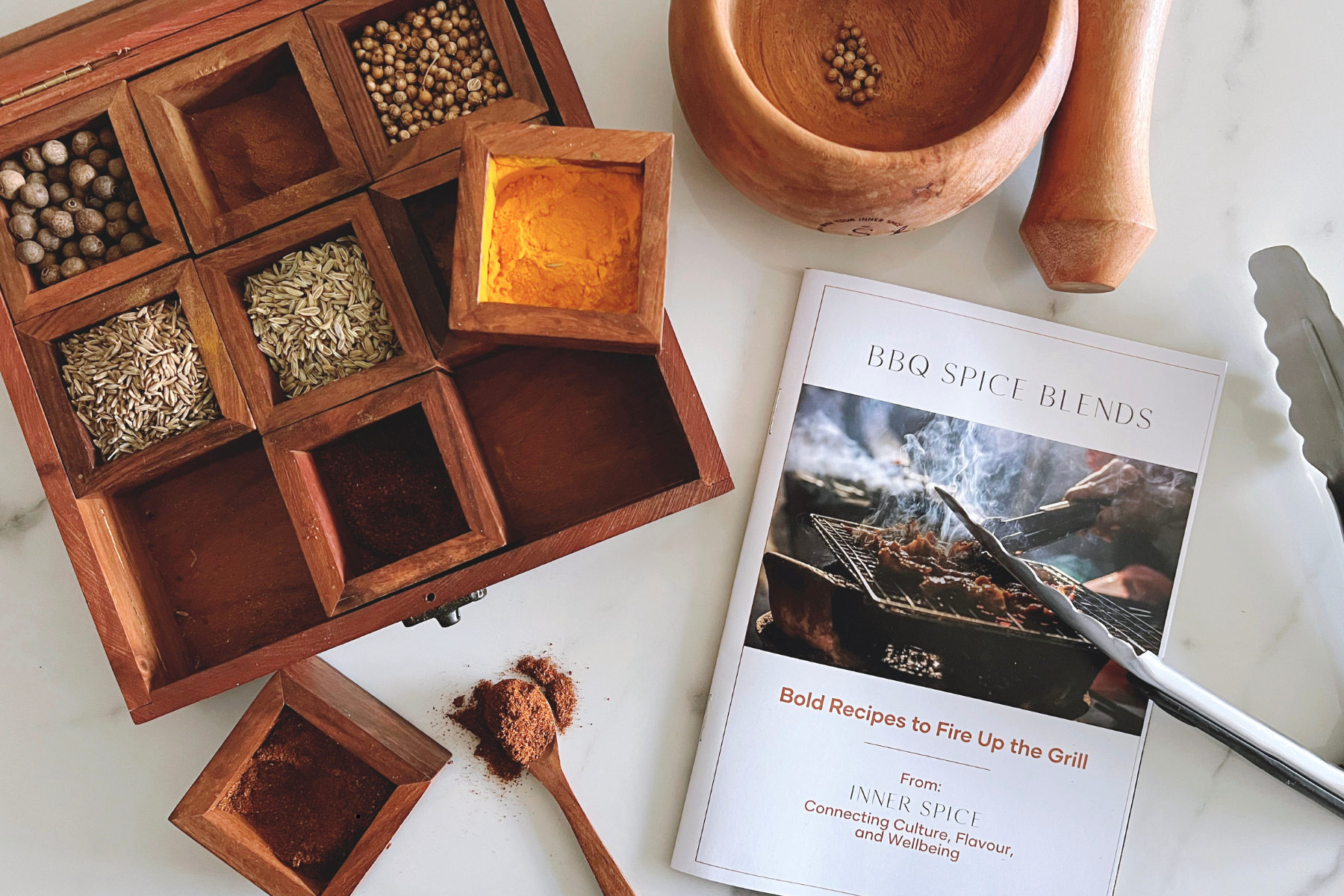
Everyday spice collection box in use to spice up the BBQ blends
A Practical Spice Cupboard Reset (That Actually Sticks)
If your spice cupboard feels overwhelming, start here:
Take everything out
Smell each spice - aroma tells you more than the label
Keep what still smells vibrant and usable
Group the spices you naturally reach for
Let go of the rest, without the guilt
Your goal isn’t a minimalist cupboard. It’s a working spice cupboard - one that supports how you really cook.
This is also why tools like a masala dabba make such a difference: they keep your most‑used spices visible, accessible, and alive.
Why This Matters Beyond the Kitchen
Food is never just food, and how we cook reflects how we live.
When kitchens feel overloaded, cooking becomes effortful; when spice cupboards are intentional, cooking then feels grounded.
Spices connect us to culture, memory, and the way food has always been prepared - slowly, attentively, and with purpose.
Used well, spices don’t complicate everyday cooking, they anchor it.
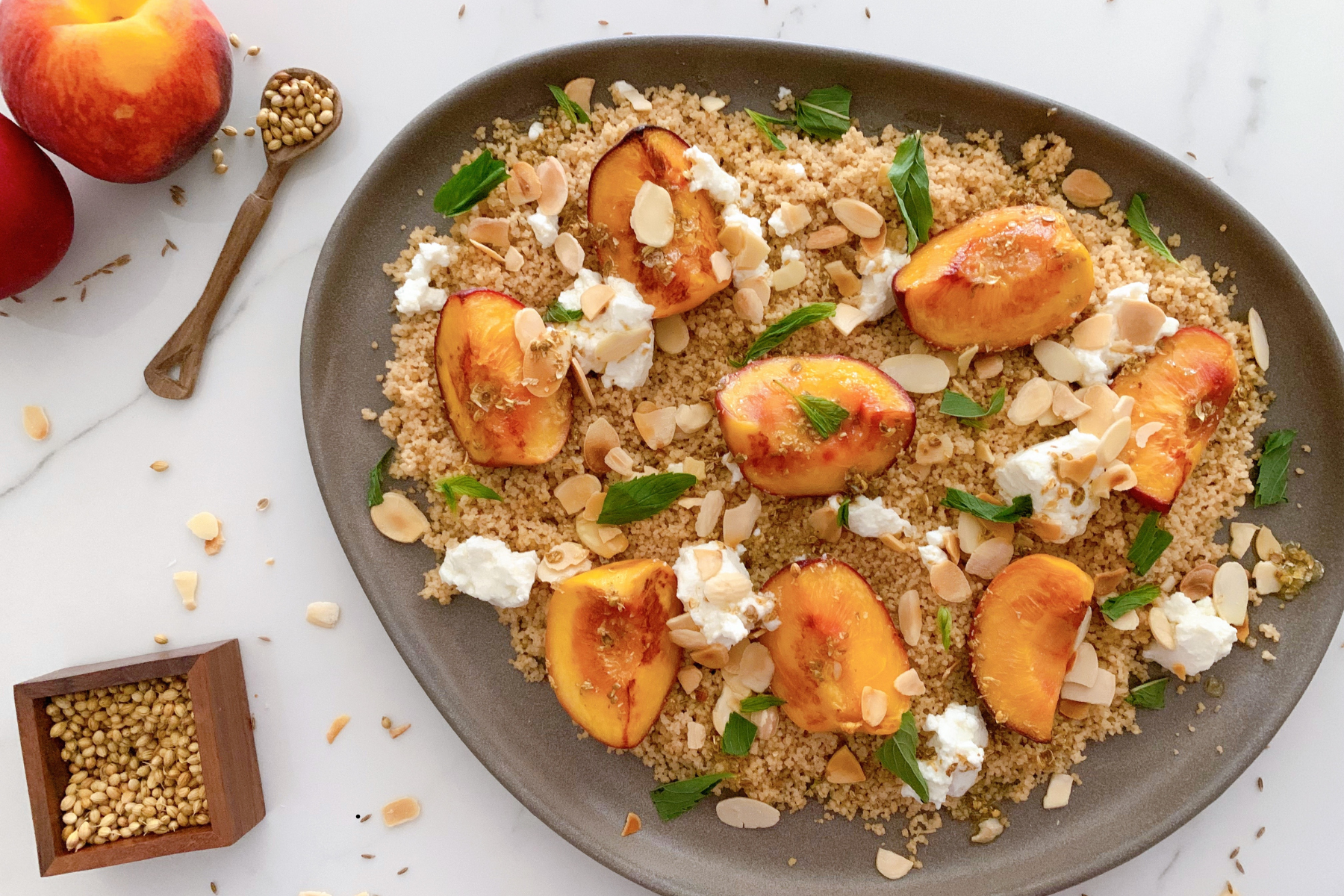
Goat’s cheese and nectarine salad with roasted, crushed coriander seeds.
The Inner Spice Philosophy
At Inner Spice, I don’t believe in filling cupboards.
I believe in building confidence in fewer spices, used well; in understanding before accumulation; in everyday spice cooking that feels intuitive, cultural, and nourishing.
The myth of the overfilled spice cupboard promises flavour, but when we learn how to use our spices - that’s where flavour and confidence actually live.
Start with one spice, use it often, and let it teach you.
That’s how everyday cooking becomes second nature, and how your spice cupboard finally starts working for you.
Related reading:
How to Store Spices for Maximum Freshness & Flavour: Tips That Make a Difference